Archie and Asher back in their yard, though giving occasional skeptical looks at the red portable fence panels. I guess the color is not suited to their highly developed taste. 😋
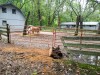
Glad everyone is home and accounted for. Smashed fencing seems like such a violation. Not only did the tree take away the fence, it altered the shape of everyone's life! Anyway that is how I've felt when big trees have smashed my corrals.
I found today that the group of geldings at the Red Barn Pastures were being held into an absurdly small paddock with two pieces of electric fence rope that had Zero electricity pulsing through it. Arrgh!
The wood is hard and well-cured, actually. The barren trunk fell over due to decayed roots and soil softened by excessive rains this summer. At first glance, it looks like it could be turned into very nice bowls and platters, but I'm not sure the lathe we have is up to the task.
Woodworking at that level is husband Gary's skill repertoire, not mine. Fiber work and music are at the top of my list.
I assumed the wood was oak, but it's so hard and fine grained I suspect I was wrong. Possibilities include cherry, sugar maple, hickory, black walnut and more. We have living specimens of most on our acreage. Logs from fallen cherry and black walnut are piled up now in various spots, but they were not aged as long as this was. I think this is probably ready to be worked right now, as it is.
This one, and two others still standing, are in the horse dry lot that was already in place when we bought the property. They appear to have been intentionally cut off and left standing to provide rubbing posts for the previous owners' horses. The people we bought from had Belgian draft horses, but they weren't the original owners and I don't know the history before them.
Black walnut or sugar maple probably would have been deliberately killed if they stood inside a grazing area or feedlot, but then I wouldn't expect even the tree trunks to have been left standing.
Our horses are Haflingers and the two geldings are 27 year old half-brothers. At this point they are pretty calm and acclimated. Last time there was a fence collapse, they ignored the gap and continued business as usual. This time was much the same, though we got out there more quickly since we saw it happen and we sent them into the barn while we cleaned up the mess. The last time they "escaped" was nearly 20 years ago when they were a lot younger and frolicsome.
My mare Tess is still a bit more adventurous at age 25, but mostly because she is picky about her grazing and wanders in search of just the right forage.
Last week the vet stood in the sheep/goat paddock and looked up at the trees and remarked with some incredibility that maples were growing there, right by the miniature horses and asses. I pointed out the red oaks. At least the latest replacement trees are lindens.
Mmmm. Belgian and Halflingers. Not quite the same size!!
Cured wood, not the easiest to work, but often beautiful! I have a log at the bottom of the Ukiah yard that is still there because it is such hard, cured oak that we think it will take 2 chainsaw chains to cut in half.
27 is getting well into the Old Age era. I remember Dr MacKay Smith saying, in Equus Mag, that the biggest change in veterinarian care in the last 75 years is worm medicine. Without it he said that the average equine age was 15 to 18 years. I just had to yell at a tenant and say that her (young) horses, allegedly on a "natural" wormer were rubbing their tails out (pinworms), were generally not thrifty and were, in fact, infecting the rest of the herd with worms. Are your old guys still doing any "work" at all?
I have ridden Tess occasionally (she's 25) but not hard. Just light exercise for both of us. She gallops hard sometimes when turned loose in the pasture.
The two boys have been retired for a long time. They still engage in horseplay rough enough that I don't want to share the pen with them when they're at it.
All three are old enough to be just pets, and that's how I treat them. They are as friendly and curious as dogs and love to be petted, brushed, and given treats.
Oops, missed this one. Most of the maples here are soft Norway types. They do drop branches frequently, but are not toxic as far as I'm aware. I've been advised in the past that horses should not eat sugar or other hard maple foliage. We also have a lot of box elder. Wild cherry is a weed here, springing up all over, but we try to keep it away from the horse areas.
The oaks are mostly white types: burr, Hill's, etc. They grow large and make good firewood if they fall, but I try to leave them alone if possible. Oak leaves fall everywhere, and the squirrels help encourage that in their dray building and acorn harvesting. One of my boys eats oak leaves if they are still green, with great relish and in preference to hay. He's been doing this for 20+ years, the whole time I've had him, with no apparent ill effect. Only the oak interests him, and it has to be fresh.
These are almost that tough. Had to put a new chain on the saw to cut the fallen one up, but that did the trick. Tried splitting some of it with wedges and a maul, and that worked even though the trunk is about 18 inches diameter.
no subject
Date: 2019-09-22 10:34 pm (UTC)And the oak? Firewood, planks or too rotten?
no subject
Date: 2019-09-23 05:34 am (UTC)Smashed fencing seems like such a violation. Not only did the tree take away the fence, it altered the shape of everyone's life! Anyway that is how I've felt when big trees have smashed my corrals.
I found today that the group of geldings at the Red Barn Pastures were being held into an absurdly small paddock with two pieces of electric fence rope that had Zero electricity pulsing through it. Arrgh!
no subject
Date: 2019-09-23 03:35 pm (UTC)Woodworking at that level is husband Gary's skill repertoire, not mine. Fiber work and music are at the top of my list.
I assumed the wood was oak, but it's so hard and fine grained I suspect I was wrong. Possibilities include cherry, sugar maple, hickory, black walnut and more. We have living specimens of most on our acreage. Logs from fallen cherry and black walnut are piled up now in various spots, but they were not aged as long as this was. I think this is probably ready to be worked right now, as it is.
This one, and two others still standing, are in the horse dry lot that was already in place when we bought the property. They appear to have been intentionally cut off and left standing to provide rubbing posts for the previous owners' horses. The people we bought from had Belgian draft horses, but they weren't the original owners and I don't know the history before them.
Black walnut or sugar maple probably would have been deliberately killed if they stood inside a grazing area or feedlot, but then I wouldn't expect even the tree trunks to have been left standing.
no subject
Date: 2019-09-23 03:43 pm (UTC)My mare Tess is still a bit more adventurous at age 25, but mostly because she is picky about her grazing and wanders in search of just the right forage.
no subject
Date: 2019-09-23 08:01 pm (UTC)no subject
Date: 2019-09-24 03:20 am (UTC)Cured wood, not the easiest to work, but often beautiful!
I have a log at the bottom of the Ukiah yard that is still there because it is such hard, cured oak that we think it will take 2 chainsaw chains to cut in half.
no subject
Date: 2019-09-24 03:43 am (UTC)I remember Dr MacKay Smith saying, in Equus Mag, that the biggest change in veterinarian care in the last 75 years is worm medicine. Without it he said that the average equine age was 15 to 18 years. I just had to yell at a tenant and say that her (young) horses, allegedly on a "natural" wormer were rubbing their tails out (pinworms), were generally not thrifty and were, in fact, infecting the rest of the herd with worms.
Are your old guys still doing any "work" at all?
no subject
Date: 2019-09-24 02:03 pm (UTC)no subject
Date: 2019-09-24 11:29 pm (UTC)The two boys have been retired for a long time. They still engage in horseplay rough enough that I don't want to share the pen with them when they're at it.
All three are old enough to be just pets, and that's how I treat them. They are as friendly and curious as dogs and love to be petted, brushed, and given treats.
no subject
Date: 2019-09-24 11:30 pm (UTC)no subject
Date: 2019-12-23 12:39 pm (UTC)The oaks are mostly white types: burr, Hill's, etc. They grow large and make good firewood if they fall, but I try to leave them alone if possible. Oak leaves fall everywhere, and the squirrels help encourage that in their dray building and acorn harvesting. One of my boys eats oak leaves if they are still green, with great relish and in preference to hay. He's been doing this for 20+ years, the whole time I've had him, with no apparent ill effect. Only the oak interests him, and it has to be fresh.
no subject
Date: 2019-12-23 12:41 pm (UTC)